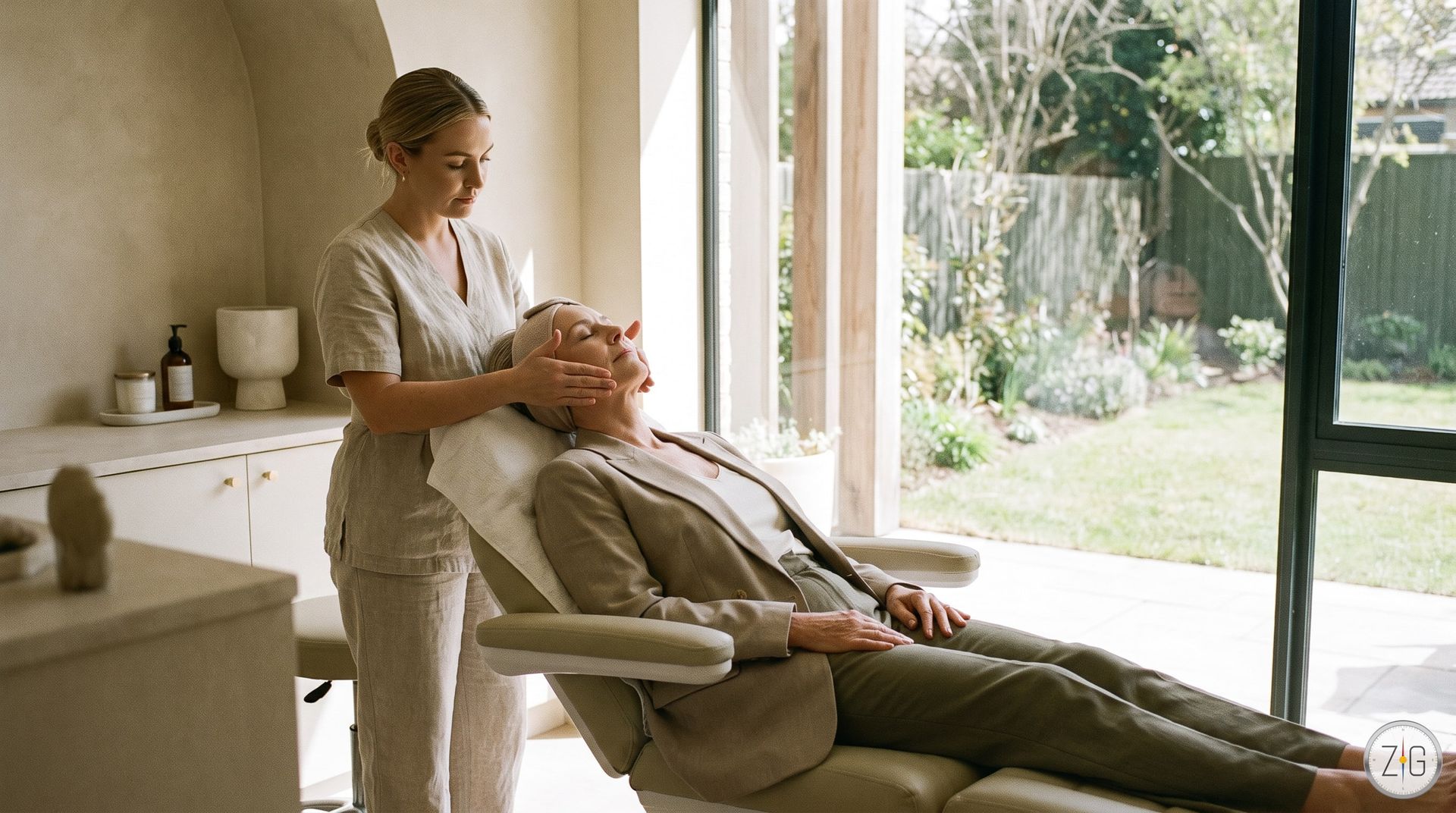
Living in Sedona or the Verde Valley means you've earned something most of the country never experiences — a genuinely extraordinary outdoor life. It also means your skin has been working harder than you probably realize.
Arizona has the highest skin cancer rate in the United States , and according to the City of Hope Cancer Center, melanoma rates here run up to 40% above national averages. That's not a coincidence. It's altitude, dry air, and 300-plus sunny days a year, compounding on your skin every single season.
Sun damage is the norm here — not the exception. And the good news is, it's treatable. This guide walks through what high-desert UV actually does to skin, which med spa treatments reverse it most effectively, and what realistic results look like for someone living your life in Northern Arizona.
What Arizona Sun Actually Does to Your Skin (And Why It Hits Harder Here)
Living at elevation changes everything. Sedona sits at 4,350 feet — where UV radiation runs 17–22% higher than sea-level locations. Cottonwood isn't far behind at 3,461 feet. That's not a minor difference. Every 1,000 feet of elevation gained adds 4–5% more UV intensity, and that math compounds daily across 300+ sunny days a year.
Then there's the terrain. According to UV-Blocker's Arizona Sun Protection Guide, desert sand reflects up to 17% of UV radiation back upward — meaning hikers and outdoor enthusiasts here are getting hit from both directions simultaneously.
The visible result? Summit View Dermatology reports Arizona dermatologists see a measurably higher incidence of premature wrinkles, fine lines, and age spots than providers in other states — with UV-driven collagen breakdown as the direct cause.
- Hyperpigmentation and brown spots from accumulated UV exposure
- Rough, uneven texture accelerated by chronic low humidity stripping moisture
- Broken capillaries visible on cheeks and nose
- Fine lines and loss of elasticity from collagen degradation
None of this is your fault. It's physics.
Med Spa Treatments That Actually Reverse Sun Damage
Four treatments consistently outperform the rest for Arizona sun damage — each targeting different layers of the problem. According to Business Research Insights, non-surgical procedures now account for 71% of the 34+ million aesthetic procedures performed globally in 2025. Here's what's actually worth your time.
- IPL Photofacial: Intense pulsed light targets melanin directly — breaking up brown spots, sun spots, and redness at the surface level. Best for patients with significant hyperpigmentation and visible broken capillaries from years of UV exposure. Minimal downtime, big visible payoff.
- Chemical Peels: Glycolic acid and TCA formulas dissolve the top layer of damaged skin, accelerating cell turnover and breaking up stubborn melanin clusters. According to GetPlump, peels are well-established for uneven tone caused by UV exposure — and Arizona's fall-through-spring "skin season" is the ideal window for them.
- Microneedling: Tiny controlled punctures trigger your skin's own collagen repair response. Where IPL treats surface pigment, microneedling rebuilds what the sun broke down underneath — texture, elasticity, and firmness. Particularly effective for patients dealing with collagen loss alongside discoloration.
- Laser Resurfacing: The most targeted option for deep sun damage, wrinkles, and rough texture. CO2 laser results, as documented by Symbioticare, continue improving for months post-treatment. Higher commitment, longer payoff.
Most patients need a combination approach — one treatment rarely addresses all layers of sun damage simultaneously. Tish Arwin, NP, builds individualized treatment plans rather than defaulting to one modality, because Arizona skin rarely presents with just one concern.
What to Expect: Results, Downtime, and How Many Treatments You'll Need
Most patients want one thing before they book: honesty. So here it is — most sun-damage treatments require more than one session, some involve brief downtime, and results build over weeks, not days. That is not a drawback. That is just how real skin repair works.
Downtime varies by treatment intensity:
- Diamond Glow: Elevate your skincare experience with the transformative DiamondGlow® Facial. This luxurious treatment transcends the ordinary, offering deep skin resurfacing like no other.
- Chemical peels: Mild flaking for 3–7 days depending on peel depth. Worth it — glycolic and TCA formulas are clinically established for breaking up melanin clusters and reversing UV-driven pigmentation.
- Microneedling: Redness subsides within 24–48 hours. NIH-published research cited by Salisbury Plastic Surgery documents a 97% subject improvement rate for RF microneedling.
According to Business Research Insights, more than 74% of patients now prefer minimally invasive procedures specifically because recovery fits into a real life — not a week off work.
Timing matters here too. AZ Big Media reports that October through March is Arizona's optimal treatment window — cooler temperatures and lower UV intensity make post-treatment healing safer and more effective. If you are reading this in fall, your timing is already right.
Why Verde Valley Women Choose Beyoutiful Skin and Wellness Over a Big-City Med Spa
Driving two hours to Scottsdale for a filler appointment sounds reasonable — until you factor in the day it costs you. There is also something a Phoenix-area practice simply cannot offer: a provider who genuinely understands what living at 4,000 feet under 300-plus days of desert sun does to your skin over decades.
Tish Arwine, NP, treats this community's skin daily. That means knowing when to book resurfacing treatments (October through March, when Arizona's reduced UV intensity makes post-treatment healing measurably safer, according to AZ Big Media), and which treatments work year-round in a high-UV environment — like Botox, which does not increase sun sensitivity post-treatment.
That context-specific knowledge is not something you get from a high-volume med spa running you through an assembly line.
- No commute — personalized care, right here in Cottonwood
- Climate-informed treatment planning — built around Verde Valley's actual UV calendar
- Relationship-based care — your provider remembers you, your skin history, and your goals
Sun damage is not a cosmetic flaw — it is a cumulative record of life lived outdoors in one of the most UV-intense environments on the planet. And it is absolutely reversible.
Arizona's relentless sun, high-altitude UV exposure, and low humidity work together on your skin in ways most people do not fully realize until they see it in the mirror. As Adam & Eve Medical Aesthetics notes, constant low relative humidity draws moisture out of skin continuously — accelerating fine lines alongside UV-driven collagen loss. The damage is real. So are the solutions.
The right treatment plan does not require a two-hour drive to Scottsdale. It requires a provider who understands what Verde Valley skin has actually been through — and knows how to bring it back.
- DiamondGlow® Facial: restore hydration and glow with limited downtime — a great first step any time of year
- Chemical peels and microneedling deliver deeper repair — best timed to Arizona's October–March skin treatment season
- Botox, fillers, and body contouring address volume loss and skin laxity as part of ongoing maintenance
You do not have to accept what years of Arizona sun have left behind. The right support is right here in Cottonwood.
Book a complimentary skin consultation at Beyoutiful Skin and Wellness and let Tish Arwine, NP help you build a plan that works for your skin, your lifestyle, and your timeline. Call or text us — we love helping Verde Valley women feel confident in their skin again.
This content is for informational purposes only and does not constitute medical advice. Consult a licensed provider for personalized treatment recommendations. Results may vary.
Frequently Asked Questions
What med spa treatments are best for sun-damaged skin in Arizona?
The most effective treatments for Arizona sun damage include IPL photofacials, chemical peels, microneedling, and HydraFacials. Many providers recommend a combination approach, since high-desert UV exposure typically causes multiple concerns — hyperpigmentation, texture, and volume loss — simultaneously.
When is the best time of year to get skin treatments in Arizona?
October through March is Arizona's recognized skin treatment season, when reduced UV intensity makes post-treatment healing safer and more effective. According to AZ Big Media, this fall-to-spring window is when dermatologists and med spas across the state see the highest demand for laser, peel, and microneedling treatments.
How many sessions will I need to see results from sun damage treatments?
It depends on the treatment and the degree of damage, but most patients see meaningful improvement in 2–4 sessions for treatments like chemical peels and microneedling. Laser hair removal typically requires 6–8 sessions for full results, according to Enhanced Aesthetics & Wellness.
Is sun damage treatment safe for Sedona and Verde Valley residents with active outdoor lifestyles?
Yes — several treatments, including Botox and HydraFacials, can be administered year-round without increased sun sensitivity. Resurfacing treatments like chemical peels and microneedling are best scheduled in Arizona's cooler months to allow safe, effective healing away from peak UV exposure.
Where can I get med spa treatments for sun-damaged skin near Sedona?
Beyoutiful Skin and Wellness is located in Cottonwood, AZ, minutes from Sedona, and offers a full range of sun damage treatments including HydraFacials, chemical peels, microneedling, Botox, and dermal fillers. Tish Arwine, NP provides personalized treatment planning tailored to the Verde Valley's unique high-desert skin environment.